Solving 2026's Biggest Problems with Ancient Wisdom
The year 2026 is defined by a paradox: we have never had more data, yet we have never felt more lost. The "Poly-Crisis"—spanning AI alignment, the loneliness epidemic, and the collapse of shared reality—is often treated as a technical bug to be patched with more technology. But the bugs are not in our software; they are in our philosophy.
To move forward, we must look back. The problems of 2026 are modern iterations of the fundamental questions answered by our ancestors thousands of years ago.
1. AI Hallucination and the Platonic Ideal
As Generative AI blurs the line between truth and fabrication, we face a crisis of epistemology. Plato’s Allegory of the Cave has never been more relevant. We are mistaking the digital shadows on our Retina displays for the sun of reality.
2. The Loneliness of the Hyper-Connected
Despite being 100% networked, the average person in 2026 reports feeling "spiritually isolated." This is because we have replaced Koinonia (deep fellowship) with Interface (transactional exchange).
Aristotle’s distinction between friendships of utility and friendships of virtue provides the roadmap home. We must stop optimizing our social networks for "reach" and start orienting them toward shared flourishing.
"He who has a clear 'Why' can bear almost any 'How.' In the age of automation, the 'Why' is the only thing the machine cannot provide."
3. Synthetic Anxiety and the Stoic Fortress
The 2026 news cycle is a firehose of algorithmic outrage. We are evolutionarily unprepared to carry the weight of every tragedy on earth in our pockets. This leads to what we call "Cognitive Burnout."
The Stoic concept of the Internal Citadel teaches us to build a mental barrier. Marcus Aurelius did not have a smartphone, but he had the Roman Empire—a chaotic, unpredictable, and often violent system. His realization that "The soul becomes dyed with the color of its thoughts" is the ultimate 2026 mental health hack.
Conclusion: The Great Integration
Solving the problems of today requires a marriage of high-tech and high-soul. We can use AI to solve climate change, but we need the Tao to teach us how to live in balance with the earth. We can use Neuralink to cure disease, but we need Buddhism to understand the nature of suffering. The future is not a destination we are heading toward; it is an integration we are practicing right now.
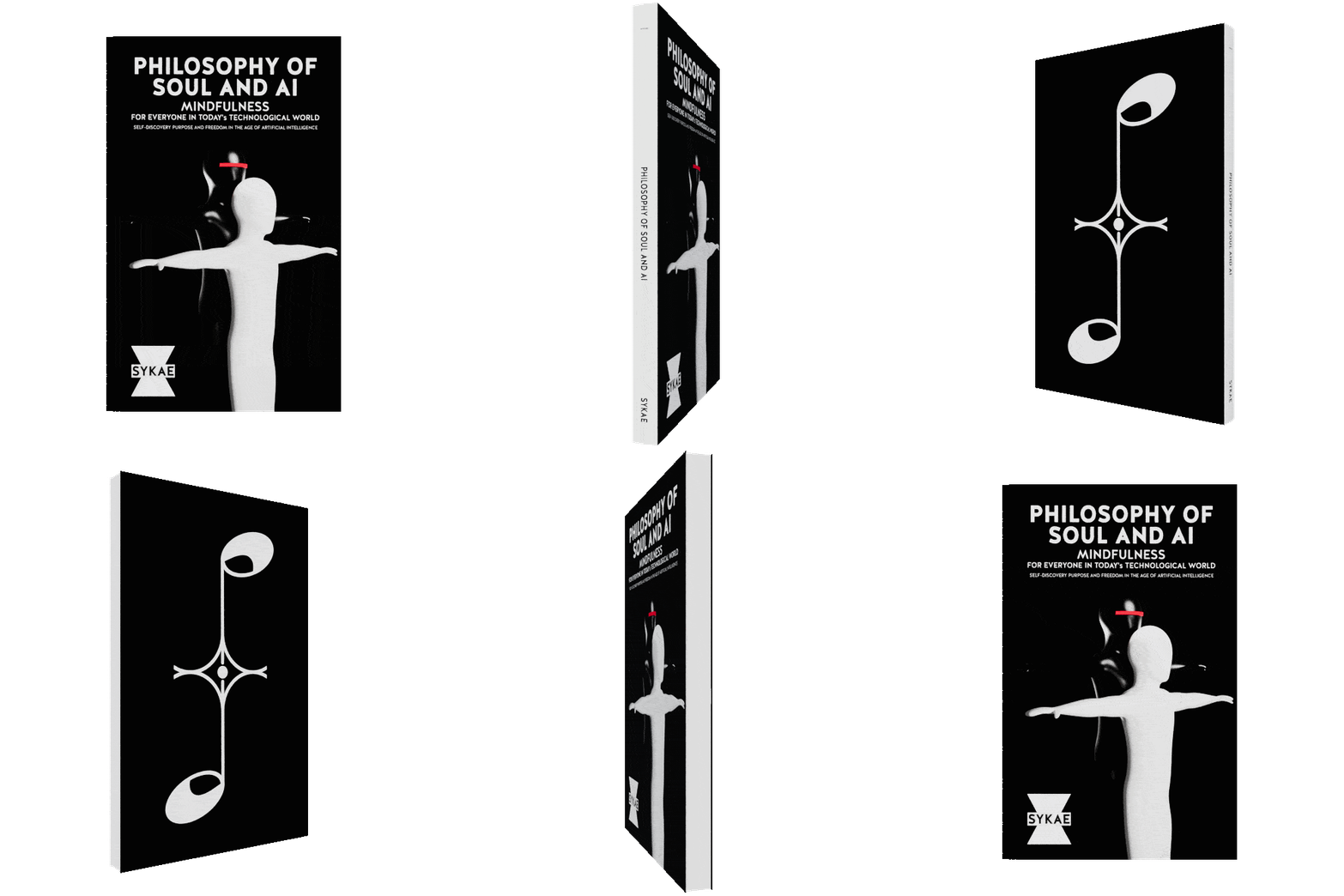
The Integration Guide
Stop drifting in the digital noise. Learn how to combine modern intelligence with ancient insight to reclaim your sovereignty.
Explore the Book