
The Role of the Author in Shaping Humanistic AI Design Standards
In the age of generative systems, there is a dangerous misconception that the "Author" is becoming obsolete. We are told that we are moving toward a world of autonomous creation, where prompts replace intent. However, in the framework of Humanistic AI Design, the Author is not just relevant—the Author is the only thing standing between resonance and noise.
From User to Architect
For too long, we have been categorized as "users" of technology. A user is passive; they consume what is offered. An Author, however, is an architect of meaning. To shape Humanistic AI, we must stop asking what the AI can do for us and start defining the standards by which it *interacts* with us.
Intentional Anchoring
Humanistic AI standards require that every output be anchored in human intent. This prevents the "hallucination of meaning" where systems produce aesthetically pleasing but philosophically empty artifacts. The author provides the moral and logical anchor.
Defining the Standards
How do authors shape these standards? It is through the rigorous application of three creative responsibilities:
1. Ethical Constraint
Authors must design the "fences" of a system. A Humanistic AI is not powerful because it can do anything, but because it is *trusted* to operate within specific human values. Authors define these boundaries through fine-tuning and system-level instructions.
2. Aesthetic Stewardship
When AI generates "averages," it dilutes culture. Authors use Humanistic standards to inject Subjective Deviance—the specific, flawed, and beautiful traits that characterize individual artistic styles. This ensures technology serves to diversify human expression rather than homogenize it.
3. Procedural Transparency
The author demands that the AI "show its work." A Humanistic standard rejects the black box. Authors advocate for systems that explain their reasoning, allowing the human partner to verify, critique, and evolve alongside the machine.
The Burden of Authorship
With the power to generate comes the responsibility to curate. Authorship in the AI era is no longer about the physical act of creation (typing, painting, coding) but about the Judgment of Value. We are the filter. We are the ones who decide which digital outputs are worthy of becoming part of the human story.
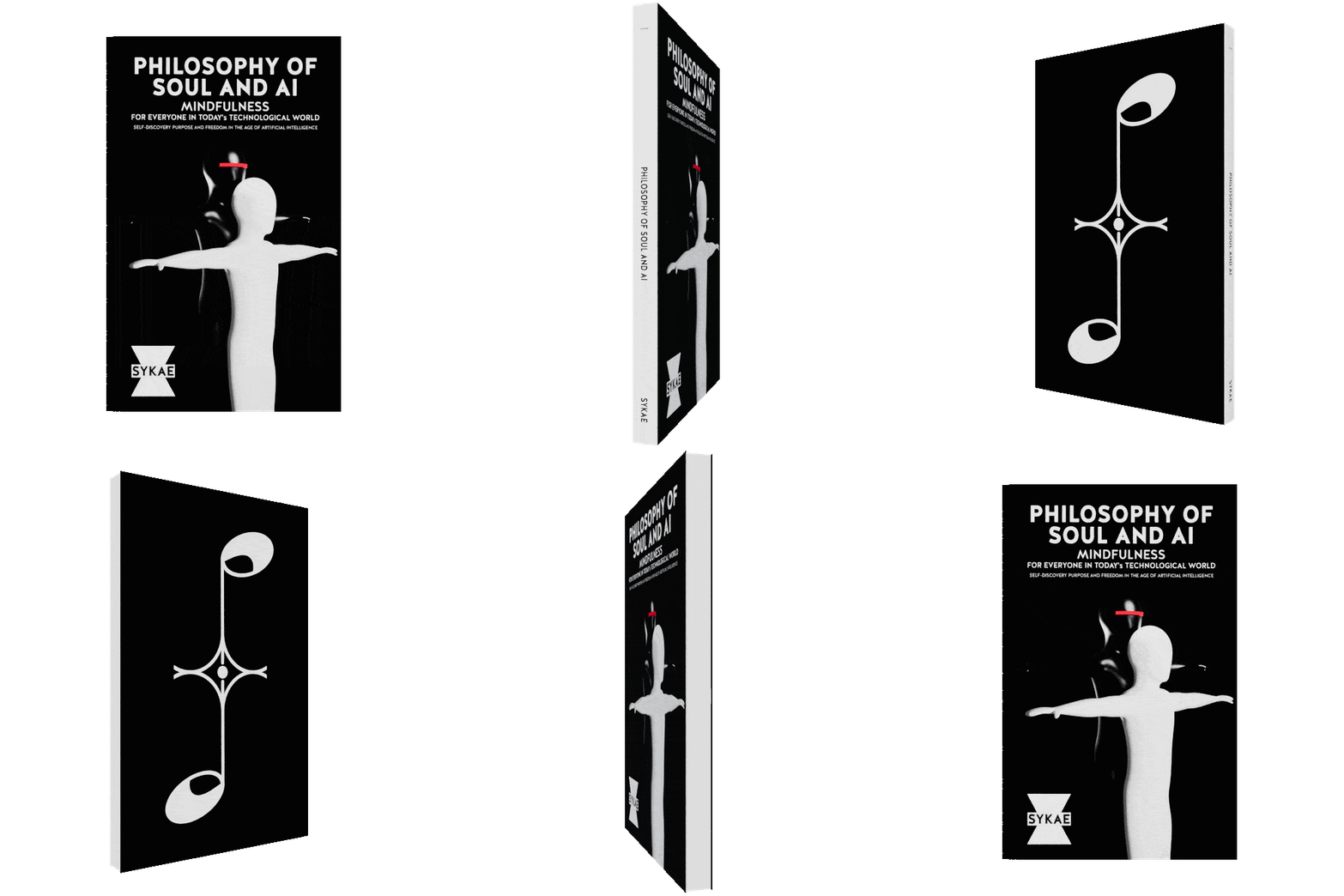
Master the New Authorship
Learn how to maintain your creative agency in an era of automation. Deepen your understanding of tech-human synergy in "Philosophy of Soul and AI."
Explore the Philosophy