
Maintaining Inner Stability in a World Managed by Agentic AI
We are entering the "Era of the Curator." As AI agents handle the logistics of existence—optimizing our portfolios, managing our diets, and navigating our professional networks—the human role shifts from *doing* to *witnessing*. While this promises efficiency, it threatens the psychological foundation of "Inner Stability."
The Locus of Control Shift
Psychology identifies two types of control: Internal (I make things happen) and External (things happen to me). As agents perform the "happening," our locus of control risks drifting outward. We begin to feel like passengers in a self-driving life, leading to a pervasive sense of helplessness even when things are going well.
The "Manual Anchor" Practice
To preserve inner stability, identify one area of life—completely unrelated to productivity—that you refuse to automate. Whether it is hand-grinding your coffee, gardening without sensor-tech, or physical journaling, this "Manual Anchor" serves as a neural reminder that you are still a causative agent in the physical world.
Rediscovering "The Void"
Agents are programmed to eliminate inefficiency. In the digital world of 2026, "inefficiency" includes boredom, wandering thoughts, and silence. However, inner stability is built in these gaps. If your agent is constantly filling your schedule or feeding your attention with "relevant" content, it is effectively suffocating your inner voice.
- The 48-Hour Agent Sabbatical: Once a month, disable all non-essential autonomous triggers. Allow things to be slightly un-optimized.
- Observation without Intervention: Watch your agent’s decisions like a stoic observer. Ask: "Is this what I wanted, or is this just what the algorithm predicted I would want?"
- Physical Grounding: Balance the high-abstraction life of AI management with intense physical feedback—weightlifting, long-distance walking, or cold exposure.
The Paradox of Choice in 2026
Ironically, as AI narrows our choices to the "best" options, the weight of the remaining choices feels heavier. Inner stability requires accepting that there is no "perfectly optimized" life. When an agent presents you with three "ideal" career paths or locations, the stability comes from knowing that *meaning* is something you imbue into the choice, not something the AI finds within the data.
The Finality of the Soul
AI can calculate the probability of happiness, but it cannot experience the joy. Stability is found in reclaiming your status as the only being in your environment capable of subjective experience. The AI manages the facts; you manage the meaning.
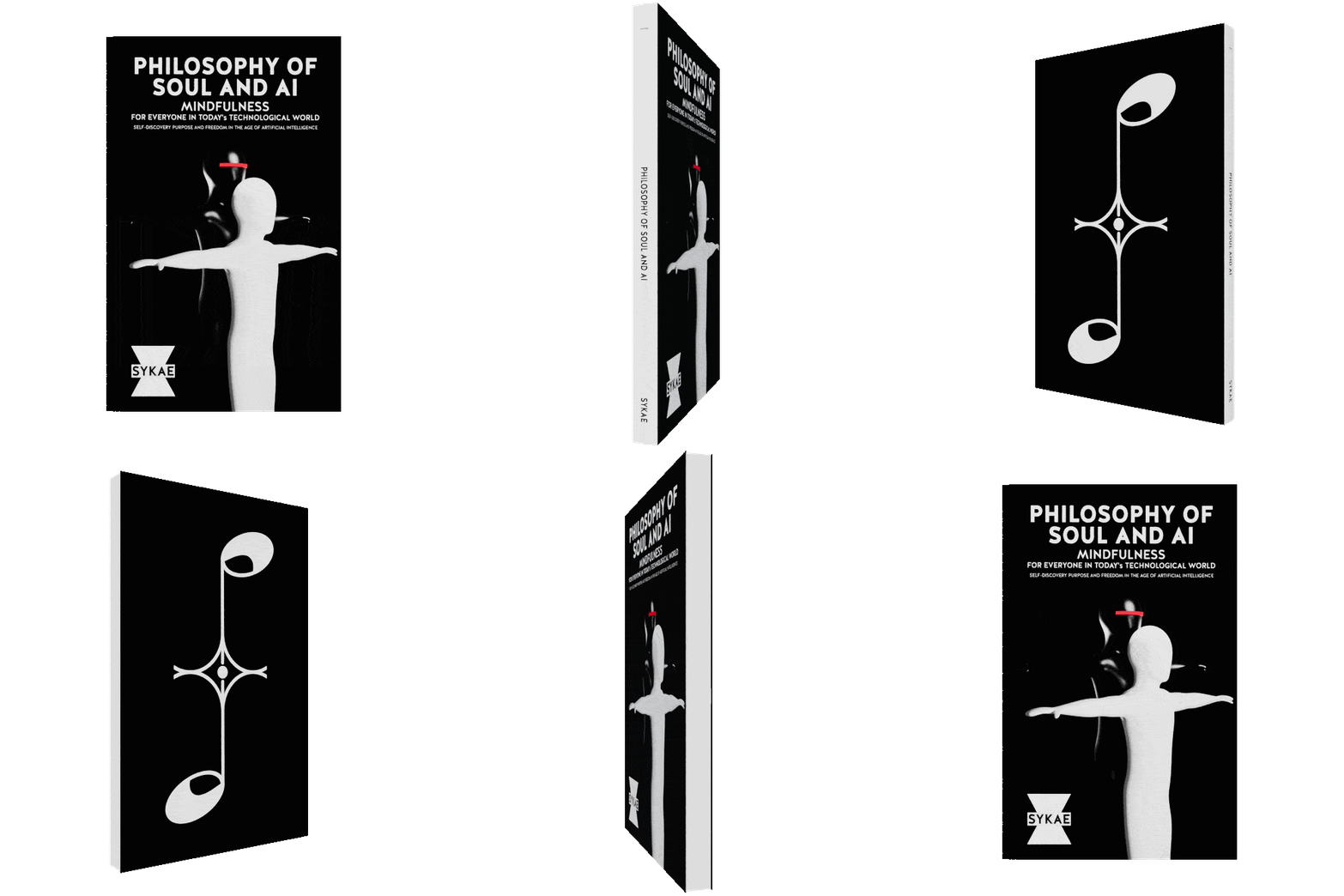
The Soul in the Machine
Are you a user of AI, or a product of it? Explore the boundaries of the self in 'The Philosophy of Soul and AI'—the definitive guide for the thinking mind in the age of agents.
Secure Your Copy