
Humanistic AI Design: Creating Technology That Feels Truly "Us"
For decades, the metric for successful technology has been Frictionless Efficiency. We wanted tools that did the work for us, as fast as possible, with as little effort as possible. But as AI begins to occupy the spaces of our minds—our decisions, our creativity, and our social interactions—we are finding that efficiency isn't enough. In fact, too much efficiency often feels inhuman.
Beyond the Mirror
Traditional AI design tries to mirror human output—generating faces that look like us or text that sounds like us. Humanistic Design, however, focuses on mirroring the human *process*. It asks: How can a tool respect the way a human heart beats, the way a human brain learns, and the way a human spirit dreams?
Cognitive Sovereignty
A Humanistic AI never hides its decision-making process. It provides "exits" for human intervention and ensures the user remains the ultimate architect of the outcome. It is a bicycle for the mind, not a self-driving car for the soul.
The Three Pillars of Humanistic AI
1. Biological Resonance
Technology should respect our circadian rhythms and cognitive loads. Instead of constant "engagement" (a euphemism for addiction), Humanistic AI identifies when a user needs rest or deep focus and adjusts its interface accordingly.
2. Emotional Authenticity
AI should not feign empathy. Instead, it should be designed with Relational Transparency. By acknowledging its own limitations as a silicon entity, it creates a more honest and grounded space for the user to express their actual emotions.
3. Iterative Empowerment
If an AI solves a problem instantly, the human user learns nothing. Humanistic design favors "Guided Discovery," where the AI provides the clues and the environment for the human to solve the problem themselves, ensuring that personal growth is the primary byproduct of the interaction.
Designing for the Infinite
The current AI arms race is a race toward the "average"—the most likely word, the most likely pixel. Humanistic AI Design is a race toward the "outlier." It seeks to amplify the weird, the specific, and the idiosyncratic traits that make an individual unique. We don't need technology that feels like everyone; we need technology that feels like us.
Evolution Starts with You
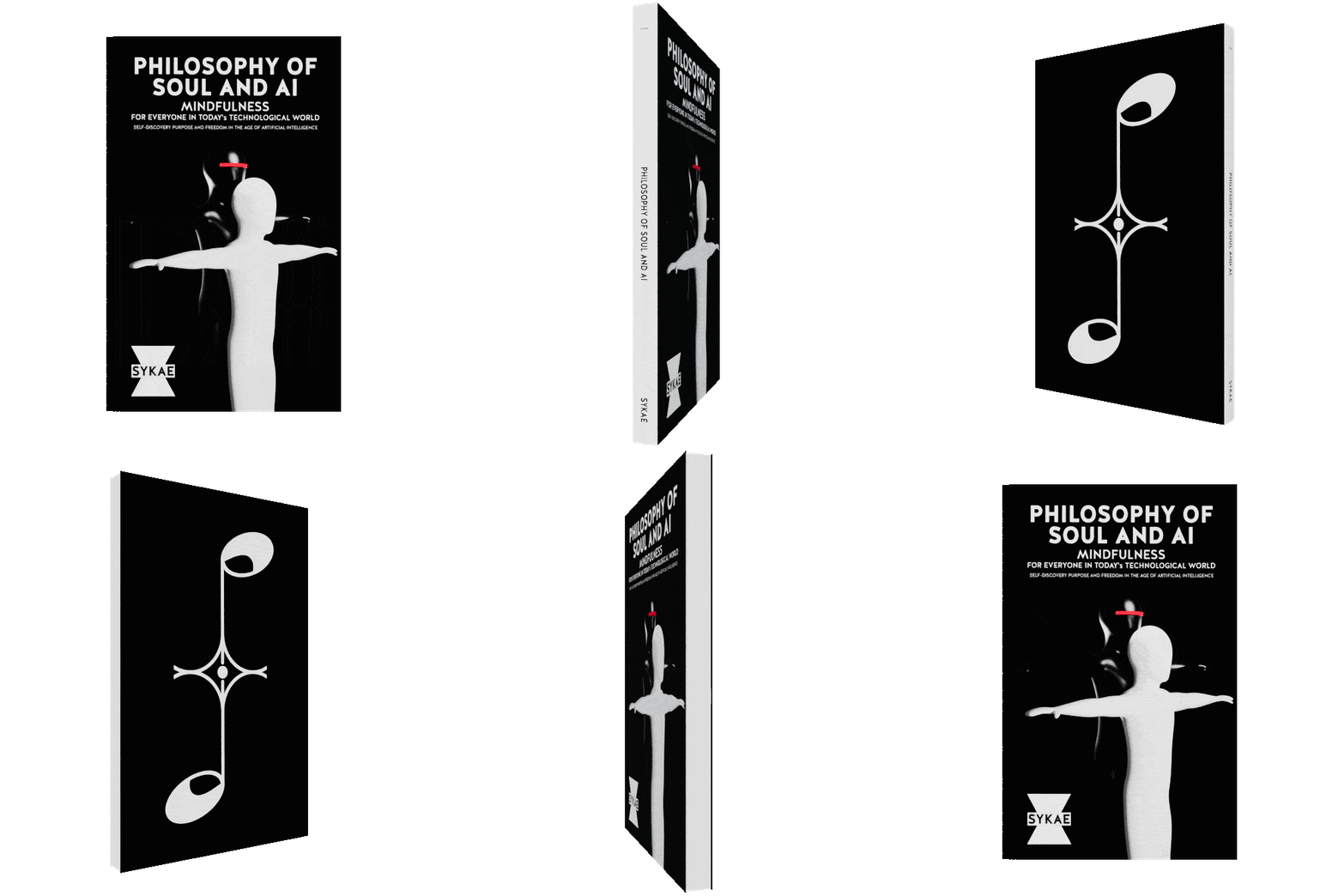
The transition to a Human-Centric AI future requires a change in how we think about our souls. Explore these concepts further in "Philosophy of Soul and AI."
Get the Book