
The Ethical Strategist: Using Applied Philosophy in Business
In the boardrooms of 2026, the most valuable officer is no longer the CFO or the CTO—it is the Chief Philosophy Officer. As corporate interests clash with autonomous AI agents, global resource scarcity, and a hyper-polarized public, technical expertise is no longer enough to ensure survival. Strategy without ethics is merely a slow-motion collapse.
Applied philosophy provides the framework for "Antifragile Governance." It moves ethics from a PR checklist to a core operational engine.
I. Aristotelian Virtue as Market Differentiation
In a saturated digital marketplace, brand loyalty is dead. What remains is Ethos. Aristotle’s Nicomachean Ethics suggests that virtue is not an act, but a habit. For a business, this means moving beyond "values statements" to "virtue loops."
Practical Application: The Golden Mean
Strategists must find the "Golden Mean" between reckless technological expansion and stagnant risk-aversion. Profit is seen not as the goal, but as the metabolic byproduct of a virtuous organization.
II. Kantian Deontology in the Age of AI
When an algorithm makes a decision that affects millions—be it a hiring filter or a credit score—whose "duty" is it to ensure fairness? Immanuel Kant’s Categorical Imperative states: "Act only according to that maxim whereby you can, at the same time, will that it should become a universal law."
The Ethical Strategist asks: "If every company automated this specific decision the way we are about to, what kind of world would we create?" If the answer is a dystopia, the strategy is discarded, regardless of its ROI.
"Management is doing things right; leadership is doing the right things. Philosophy is knowing the difference."
III. Existentialism and the Remote Workforce
The workforce of 2026 is plagued by "Quiet Quitting" and existential dread. When labor is increasingly abstracted by digital interfaces, the search for meaning becomes the primary driver of retention.
By applying Existentialist thought (Sartre, Camus), leaders stop treating employees as "Human Resources" (units of production) and start treating them as "Human Agents" (creators of meaning). This shift from extrinsic motivation (bonuses) to intrinsic alignment (mission) is the only way to lead in a post-automation economy.
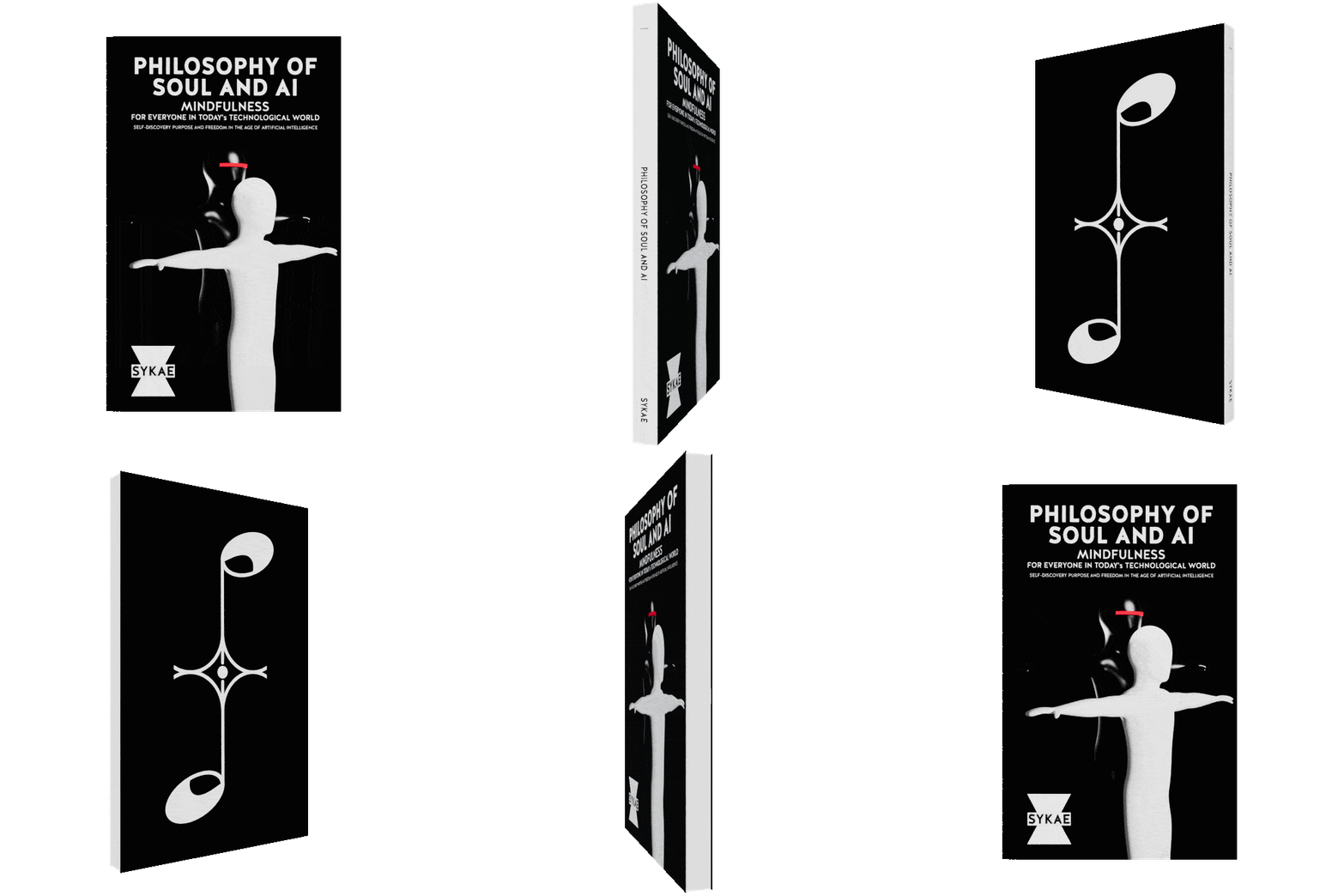
The New Leadership Blueprint
Business is the largest force for change on the planet. Ensure yours is a force for good. Master the philosophy of soul in an automated age.
Read the Manifesto