
Digital Brain Rot: What It Is and How to Reverse It in 2026
By early 2026, the term "Digital Brain Rot" has moved from a slang insult to a clinical reality. It is characterized by the degradation of deep-work capacity, the erosion of semantic memory, and a dopamine system so fried by 15-second "agentic highlights" that reading a long-form article feels like a physical chore.
The Science of Synaptic Thinning
The human brain is neuroplastic—it adapts to its environment. When your environment consists of hyper-optimized, high-frequency digital stimuli, the brain prunes the pathways required for slow, deliberate thought. This "thinning" of the prefrontal cortex leads to the feeling of being perpetually "busy" while accomplishing nothing of substance.
The 2026 Attention Deficit
It's not that we lack attention; it's that our attention has been commoditized. Every app you open is an auction for your focus. Brain rot occurs when you stop being the bidder and start being the product. The first step to recovery is acknowledging that your focus is a finite, valuable resource.
Protocol: Neurological Re-Wilding
Reversing brain rot isn't about "quitting the internet"—which is impossible in the 2026 economy—it's about re-wilding your mind through specific, high-friction cognitive exercises.
- The 45-Minute Monolith: Force yourself to do one single task for 45 minutes with zero notifications. If the urge to switch tasks arises, acknowledge it and let it pass. This builds "attentional stamina."
- Semantic Re-Anchoring: Once a day, summarize a complex topic using a pen and paper. Physical writing engages different neural circuits than typing, forcing the brain to slow down and process meaning.
- Low-Dopamine Mornings: Do not check your agent reports or social feeds for the first 90 minutes of the day. Allow your brain to operate on its own baseline before hijacking it with external stimuli.
The Architecture of the 'Bored' Mind
Boredom is the birthplace of original thought. In an age where every empty second is filled by a digital agent's summary or a feed, we have eliminated boredom. To reverse brain rot, you must re-introduce "dead time"—moments of pure, unmediated observation where the mind is allowed to wander without an objective.
Cognitive Sovereignty
True intelligence in 2026 isn't measured by how fast you can process information, but by how long you can sustain a single thought. Reclaiming your mind is an act of rebellion against the algorithmic status quo.
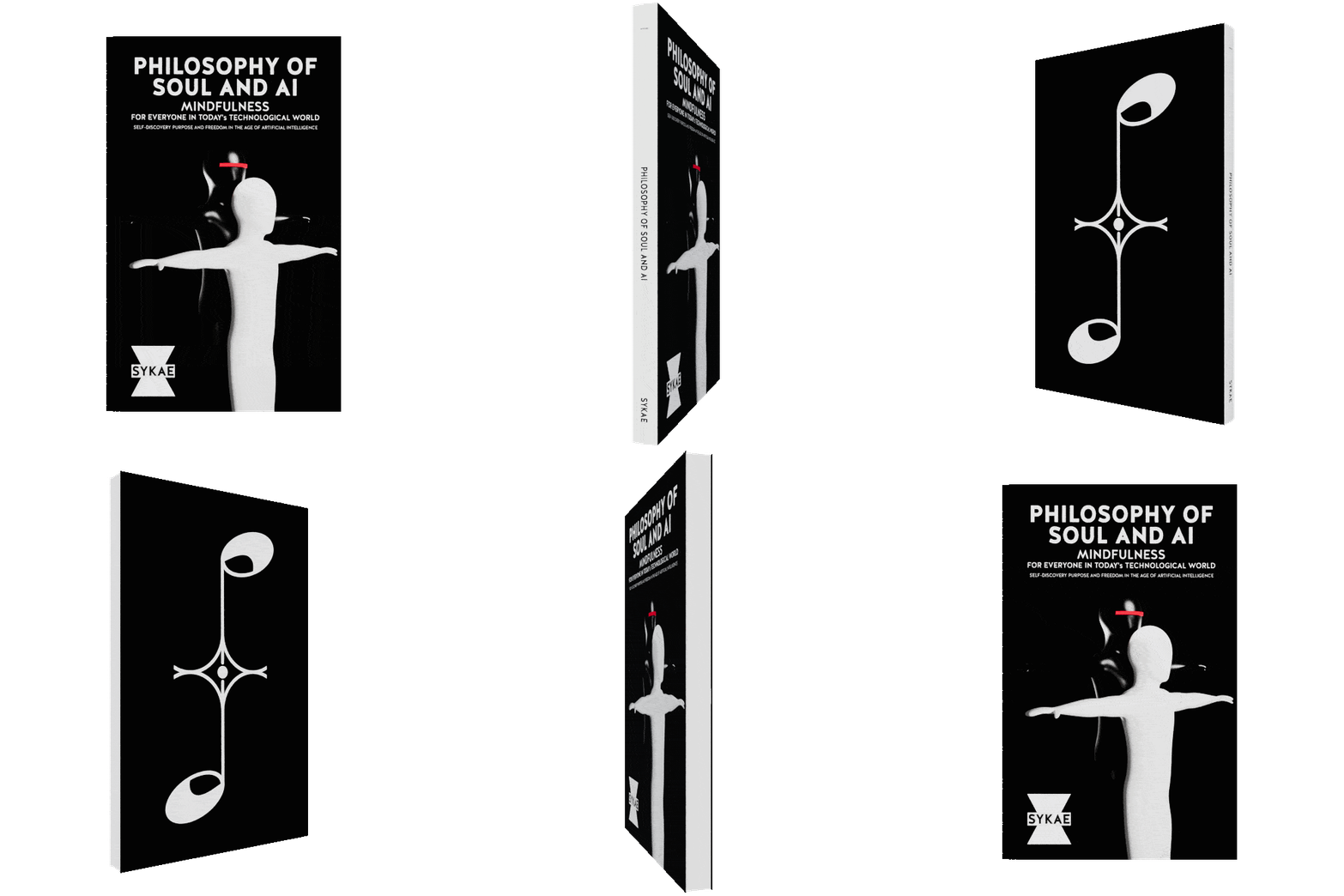
Shield Your Mind
Learn the advanced psychological frameworks to protect your cognitive sovereignty. 'The Philosophy of Soul and AI' is your survival guide for the mental landscape of tomorrow.
Pre-Order Now