Decentralized Identity: The Key to True Digital Sovereignty
If digital sovereignty is the destination, Decentralized Identity (DID) is the vehicle that gets us there. For decades, our identities online have been fractured, rented from tech giants, and siloed within databases we don't control. It is time to reclaim the center of our own digital orbits.
The Failure of Centralized Identity
Currently, you don't "own" your email address, your social handle, or your domain. You are granted permission to use them by a registrar or platform. When that platform changes its rules—or its ownership—your identity can be altered or erased instantly. This is Digital Feudalism.
How DIDs Work: A Simple Primer
A Decentralized Identifier (DID) is a new type of globally unique identifier that doesn't require a central registration authority. It is usually paired with Verifiable Credentials (VCs)—digital equivalents of your passport, driver's license, or university degree.
Unlike a physical wallet, where you might lose your cards, a DID-based wallet uses cryptography to prove you are who you say you are, without revealing unnecessary data. This is known as Zero-Knowledge Proofs.
The Sovereignty Flow
User generates Keys → Blockchain anchors the Identifier → Institutions issue Credentials → User shares only what is necessary.
Privacy as a Default, Not an Option
Imagine proving you are over 21 to a website without showing them your name, address, or exact birthdate. With Decentralized Identity, your wallet simply sends a cryptographic "Yes" that the website can verify against a trusted issuer. This eliminates the "honeypot" problem: databases full of personal info waiting to be hacked.
The SYKAE Vision: Human-Centric Nodes
At SYKAE, we believe the human should be the primary node of the network. Every interaction should begin and end with your consent. By adopting DID protocols, we move away from "User Accounts" and toward "Sovereign Connections."
When you own your identity, you own your future. You are no longer a data point in a server farm; you are a sovereign agent in a vast, interconnected digital world.
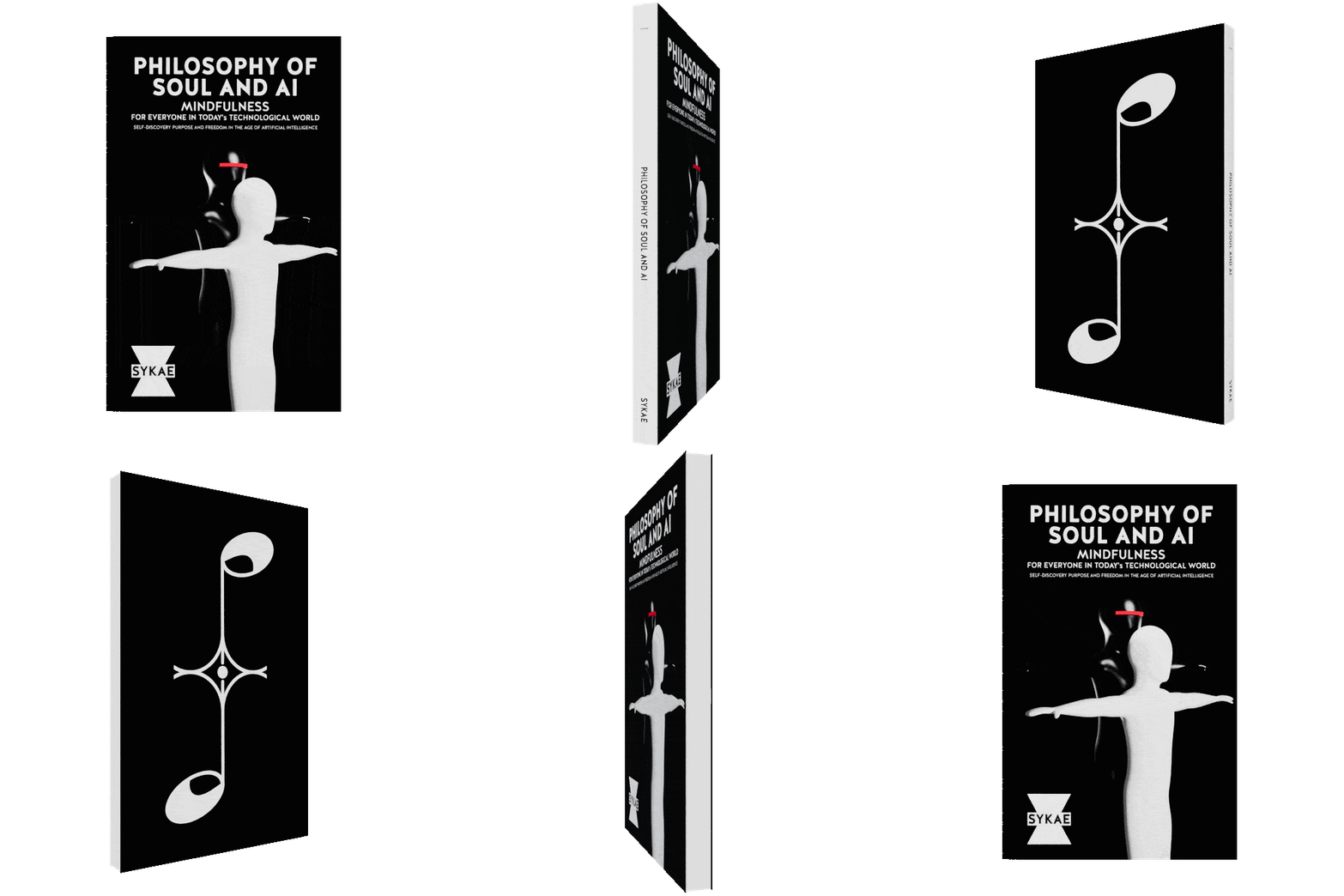
Master Your Digital Self
The transition to a sovereign future isn't just about code—it's about consciousness. Learn how to protect your essence in the age of intelligence.
Explore the Philosophy