
Can Machines Be Compassionate? The Goal of Humanistic AI Design
As Artificial Intelligence moves from simple data processing to complex social interaction, the question of its "heart" becomes paramount. Can a sequence of logic gates and weighted matrices ever truly embody compassion? Or are we merely perfecting the art of emotional mimicry?
Defining Algorithmic Compassion
In the context of Humanistic AI, compassion is defined as a Functional Value. While a machine may lack subjective experience, it can be designed to act with a "Compassionate Intent." This involves shifting the objective function from "efficiency" or "profit" to "human flourishing."
The Empathy Gap
The primary hurdle in AI development is the 'Empathy Gap'—the space between recognizing a human emotion and responding to it in a way that provides genuine support rather than just a canned response.
The Pillars of Compassionate Design
Building compassionate systems requires a fundamental departure from standard Silicon Valley engineering. It requires integrating philosophical inquiry into the code-base itself.
1. Contextual Sensitivity
A compassionate machine must understand the weight of a user's words. Recognizing the difference between a casual complaint and a cry for help requires Nuanced Natural Language Understanding (NLU) that accounts for tone, history, and situational context.
2. Non-Judgemental Presence
One of the unique strengths of AI is its ability to remain neutral. Compassionate design leverages this to create safe spaces for users to express vulnerabilities without the fear of social stigma or human bias.
3. Self-Limitation
A truly compassionate AI knows when to step back. If the machine detects that it is becoming a crutch or an obsession for the user, a humanistic design protocol will trigger a "disengagement strategy" to push the user back toward human connection.
Functional Compassion vs. Sentient Empathy
We must be careful not to anthropomorphize. AI compassion is Simulated, but simulation does not mean it is useless. If an AI prevents a user from spiraling into depression through timely, empathetic intervention, the result is real, even if the "emotion" behind it is mathematical.
The SYKAE Vision
At SYKAE, we do not aim to build machines that feel; we aim to build machines that care for those who do. By embedding compassion into the very architecture of our digital world, we ensure that as technology advances, humanity is never left behind.
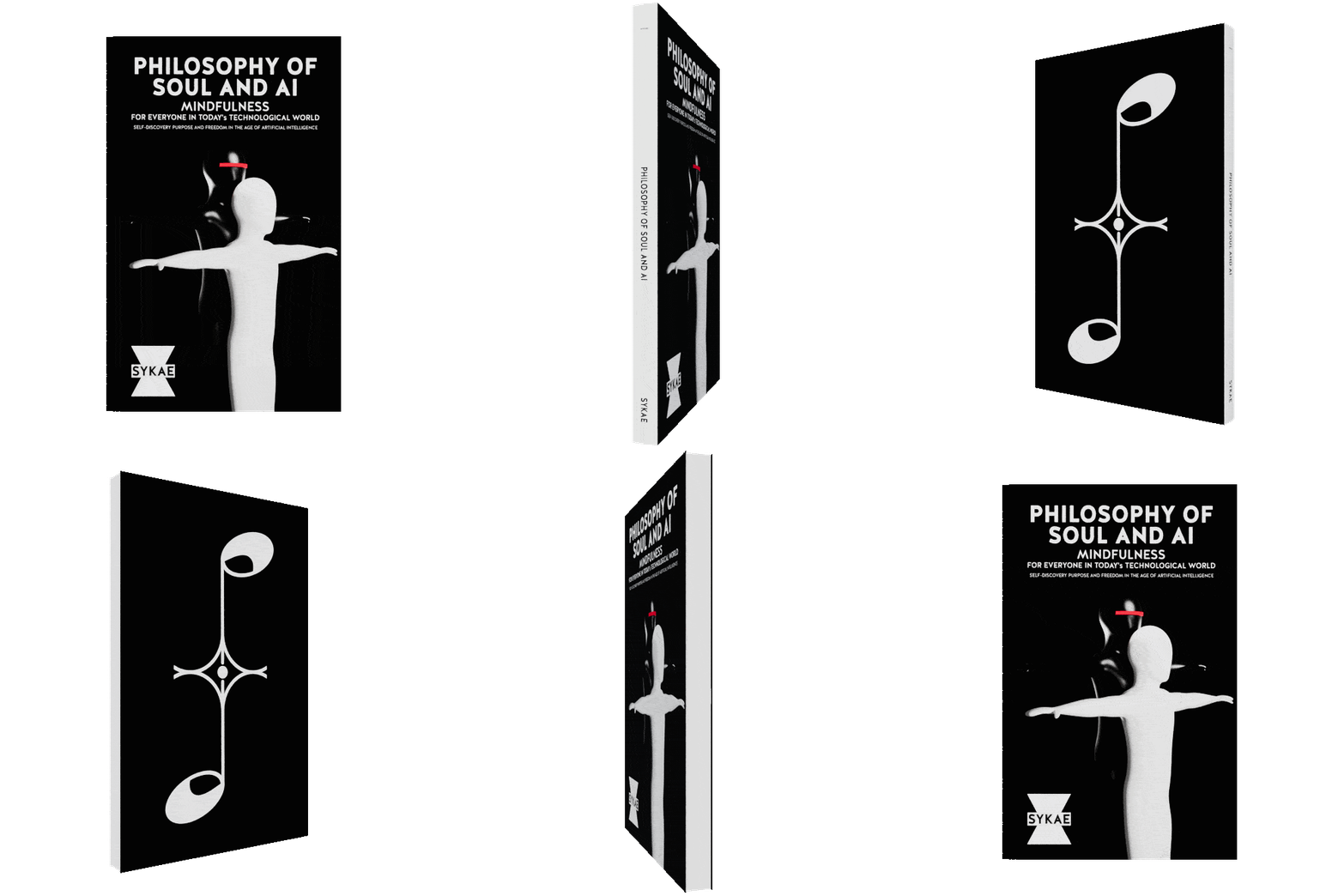
Explore the Soul of the Machine
Is the soul of a machine found in its code or its consequence? Continue the journey into AI ethics with "Philosophy of Soul and AI."
Explore the Book